
Introduction
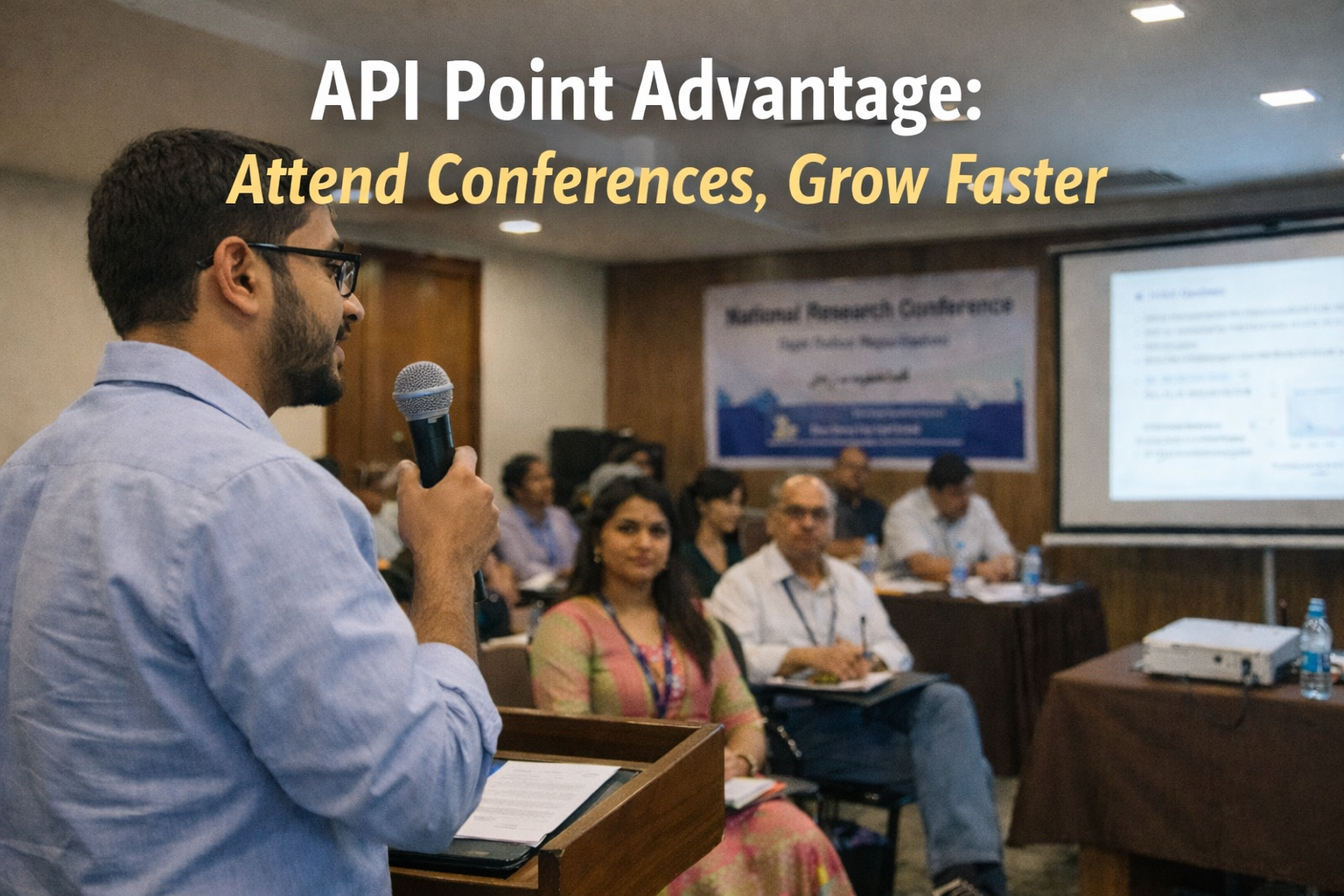
In India, academic career progression often involves multiple layers of evaluation. For faculty members, researchers, and PhD scholars, performance is assessed not only through publications but also through active engagement with the academic community. One of the mechanisms that quantifies such contributions is the Academic Performance Indicator (API) score, widely used in many Indian universities. Attending conferences, presenting papers, and participating in scholarly events directly influence these scores. Understanding the API point advantage helps scholars and faculty members recognise why consistent conference participation can accelerate career growth and strengthen their professional profile.
How Conferences Influence API Scores
The API system in India assigns points for various scholarly activities, including publications, teaching, research guidance, and academic presentations. Conference participation, particularly presentations at national or international events, is considered an important indicator of engagement. By attending conferences, faculty and doctoral scholars can accumulate points that reflect both the quantity and quality of their academic contributions. For example, a faculty member presenting multiple papers at different conferences demonstrates sustained scholarly involvement, which translates into higher API scores.
For PhD scholars in private universities, where research output and visibility may be scrutinised more closely due to institutional reputation, API points offer a structured way to measure professional growth. Each presentation is not just an opportunity to share research but also a tangible marker of effort that contributes to career evaluation. This system encourages regular participation and helps academics track progress systematically.
Networking and Academic Growth
Beyond points, attending conferences allows scholars to interact with peers, senior faculty, and experts from different disciplines. These interactions often spark collaborations, joint publications, and mentorship opportunities. In India, where networking can significantly influence research opportunities and academic recognition, conferences provide a platform to expand professional circles and gain visibility. API points, in this sense, act as both a motivation and a metric, incentivising engagement while simultaneously reflecting actual scholarly contributions.
A faculty member who consistently participates in conferences not only strengthens their research profile but also brings insights back to their institution. These insights can improve teaching, guide doctoral students more effectively, and inform departmental research strategies. For PhD students, understanding how conference participation affects API scores can guide decisions about which events to prioritise, balancing travel, workload, and potential impact.
Skill Development and Visibility
Presenting at conferences hones communication skills, critical thinking, and the ability to defend research arguments — all qualities that enhance professional credibility. For Indian academics, where viva voce assessments, faculty appraisals, and peer recognition play a major role in career advancement, these skills are invaluable. Each presentation contributes to a track record that is visible to supervisors, peers, and evaluators.
Moreover, conference participation exposes scholars to emerging trends, methodologies, and interdisciplinary research, ensuring that their own work remains relevant. For private university faculty, who may face pressure to demonstrate both teaching excellence and research output, regular participation in conferences helps maintain a balanced portfolio that meets institutional and regulatory expectations.
Challenges and Strategic Participation
While the benefits are clear, accumulating API points through conferences requires careful planning. Travel costs, time away from teaching or research, and preparation for presentations can be demanding. Indian academics, particularly those balancing family or professional responsibilities, may find it challenging to attend multiple events each year. However, strategic participation — choosing conferences aligned with research interests, focusing on events that provide meaningful feedback, and combining presentation opportunities with networking — can maximise both professional growth and API points efficiently.
It is also important to consider the quality of the conference. Not all events contribute equally to professional recognition or API scoring. Selecting reputable conferences, whether national or international, ensures that the effort invested translates into meaningful outcomes for both the CV and API evaluation.
Conclusion
For Indian PhD scholars and faculty, attending conferences offers more than academic engagement; it provides measurable advantages in career development. The API point system formalises this benefit, rewarding consistent participation, quality presentations, and professional involvement. Beyond scores, conferences strengthen research, expand networks, and develop skills that are crucial for long-term growth. Recognising the API point advantage encourages scholars and faculty to participate proactively, ensuring that each event contributes to both personal development and broader academic recognition. In this way, attending more conferences is not merely a procedural activity but a strategic step toward sustained professional growth.