
Introduction
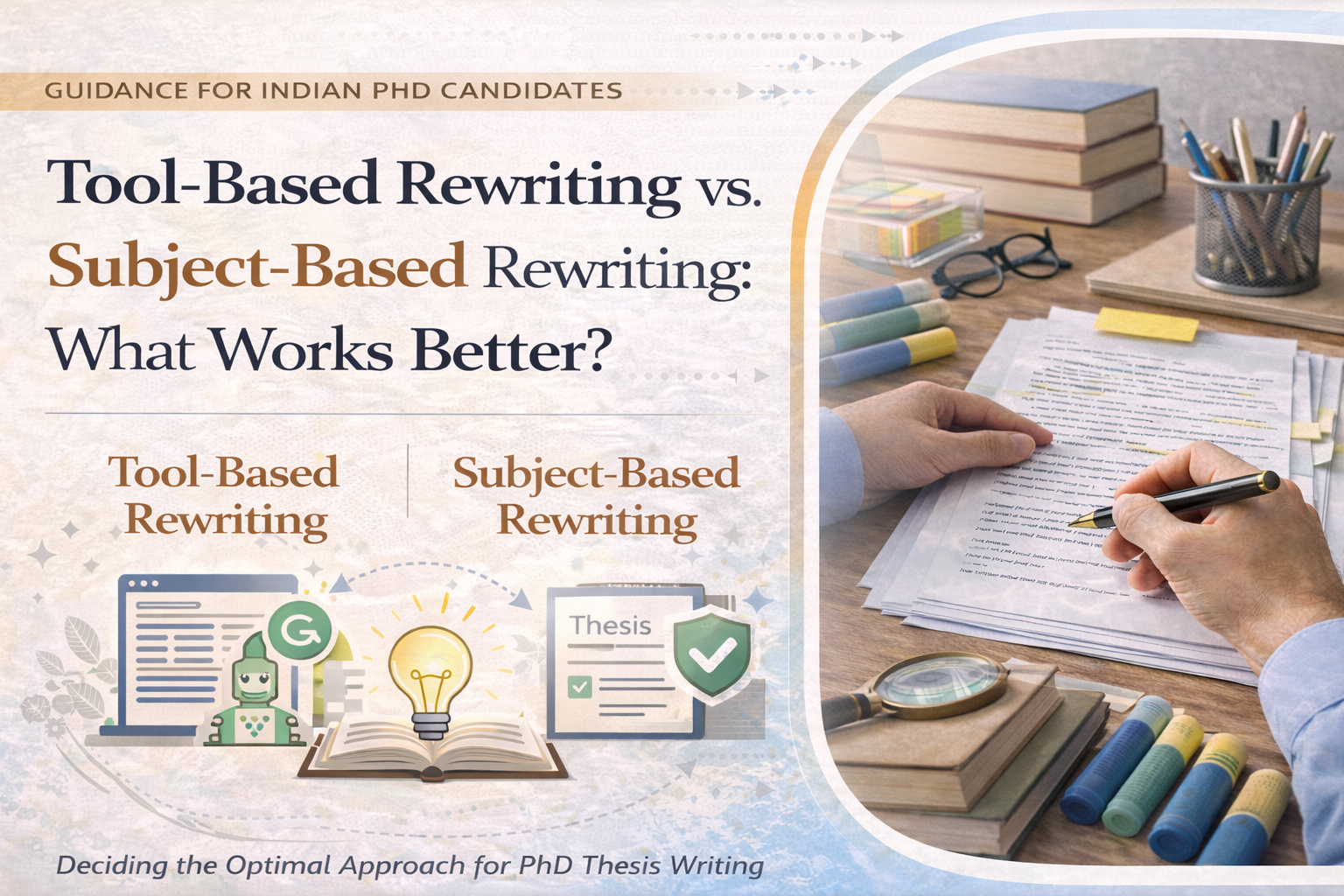
The journey of a PhD scholar in India, especially within private universities, often involves navigating the complexities of rewriting thesis content to maintain originality. Many doctoral candidates find themselves at a crossroads when deciding between tool-based rewriting—using software like paraphrasing apps—and subject-based rewriting, which relies on their own understanding of the material. The question of what works better is relevant to doctoral admission in India, where the emphasis is on both academic rigor and originality.
For students balancing research with professional or personal commitments, rewriting can be a time-consuming challenge. While rewriting tools offer quick alternatives, their effectiveness compared to subject-based approaches requires careful consideration. This blog explores these two methods, shedding light on their strengths and limitations in the Indian academic context.
The Role and Limitations of Tool-Based Rewriting
Tool-based rewriting uses automated software to rephrase text quickly, often replacing words with synonyms or restructuring sentences. This method can seem appealing to Indian PhD scholars who face tight deadlines or struggle with academic writing in English. Such tools promise to reduce plagiarism scores by generating alternative expressions, sometimes with just a few clicks.
However, these tools often overlook the deeper meaning behind the text. In disciplines such as engineering, social sciences, or humanities, where precision and context matter, automated rewriting can distort ideas or create awkward phrasing. For example, a phrase conveying a complex theoretical concept might be altered in a way that loses its intended significance, which supervisors and examiners can easily detect.
Moreover, tool-based rewriting may produce inconsistent tone and style, making the thesis appear fragmented. Indian universities value coherence and a consistent academic voice, which can suffer when relying too heavily on software-generated text. There is also the risk of overdependence, where scholars might prioritize quantity of rewritten content over quality.
Subject-Based Rewriting: Engaging with the Material
Subject-based rewriting requires the scholar to fully understand the source material and then express it in their own words. This method is more time-intensive but leads to a clearer demonstration of comprehension and original thought, which are critical in the Indian doctoral education system.
When scholars rewrite based on subject knowledge, they naturally preserve the nuances and technical details essential to their field. This approach supports stronger argumentation and better integration of ideas, especially important in interdisciplinary research often pursued in private universities. It also enhances the candidate’s confidence during viva voce examinations, where familiarity with the content is key.
Additionally, subject-based rewriting encourages deeper learning and helps scholars develop an authentic academic voice. This process, while demanding, ultimately results in a thesis that reflects the researcher’s intellectual contribution rather than just rephrased content.
Finding the Right Balance
Neither tool-based nor subject-based rewriting alone is perfect for Indian PhD candidates. A balanced approach that combines the efficiency of rewriting tools with the insight of subject-based understanding tends to yield the best results.
For instance, scholars can use rewriting tools to generate initial alternatives and identify problematic sections but should then review and revise the output carefully to ensure accuracy and coherence. Consulting supervisors for feedback during this process is also invaluable, as it helps maintain academic standards and contextual relevance.
Private universities often encourage this blended strategy, recognizing the diverse backgrounds of doctoral candidates and the varying levels of familiarity with academic writing. This approach respects both the need for originality and the practical challenges students face, especially those managing research alongside other responsibilities.
Conclusion
Choosing between tool-based rewriting and subject-based rewriting is not a matter of one being inherently better than the other but of understanding how each fits into the broader academic process. For Indian doctoral candidates in private universities, subject-based rewriting ensures depth and authenticity, while tools can assist with efficiency and language refinement. Combining both methods thoughtfully supports the creation of theses that are original, clear, and academically sound—qualities essential to successful doctoral admission and research outcomes.