Introduction
For many Indian students, higher education has always been associated with the idea of attending classes on campus, sitting for lectures, and participating in university life. Yet, over the past few decades, distance education has emerged as a widely accepted alternative, offering flexibility to those who cannot follow the traditional route. With private universities and open learning institutions expanding their reach, distance education has become an option not only for working professionals but also for homemakers, mid-career employees, and students in remote areas. Understanding what distance education actually means and who benefits the most from it is essential for making informed choices in India’s complex academic landscape.
Understanding Distance Education
Distance education refers to academic programs where learners and teachers are not physically present in the same space. Instead of attending regular in-person classes, students learn through study materials, online lectures, recorded sessions, or periodic contact classes. Universities such as Indira Gandhi National Open University (IGNOU) and several private institutions have built structured systems that allow students to pursue undergraduate, postgraduate, and even doctoral programs from wherever they live. For many, the primary attraction is flexibility—being able to study while balancing jobs, family responsibilities, or other commitments. In India, where educational access varies greatly depending on geography and social background, distance education bridges a critical gap.
The Advantages of Distance Learning
The most obvious advantage is accessibility. A student living in a small town in Bihar or a working professional in Bengaluru can both enroll in the same program without relocating. Cost-effectiveness is another important factor, as distance education often requires lower fees compared to full-time campus programs. For mid-career professionals, distance learning offers a chance to acquire advanced degrees without leaving their jobs, which is increasingly important in private universities and corporate environments that look for updated qualifications. For women balancing family duties, distance education provides a way to continue academic aspirations without compromising household responsibilities. These practical benefits have made distance education a popular route for those who might otherwise be excluded from higher studies.
Challenges and Considerations
Despite its benefits, distance education is not without challenges. Students often struggle with self-discipline, as the absence of regular classes demands strong motivation and independent study habits. Access to technology also plays a role; while online platforms have expanded, not every student in rural India has stable internet connectivity. Employers, too, may sometimes view distance education differently from regular degrees, particularly in highly competitive fields. However, with increasing recognition from regulatory bodies and accreditation processes, the perception of distance learning is steadily improving. Choosing a reputed university with transparent evaluation and credible faculty support remains crucial for ensuring that a distance degree carries professional weight.
Who Should Choose Distance Education?
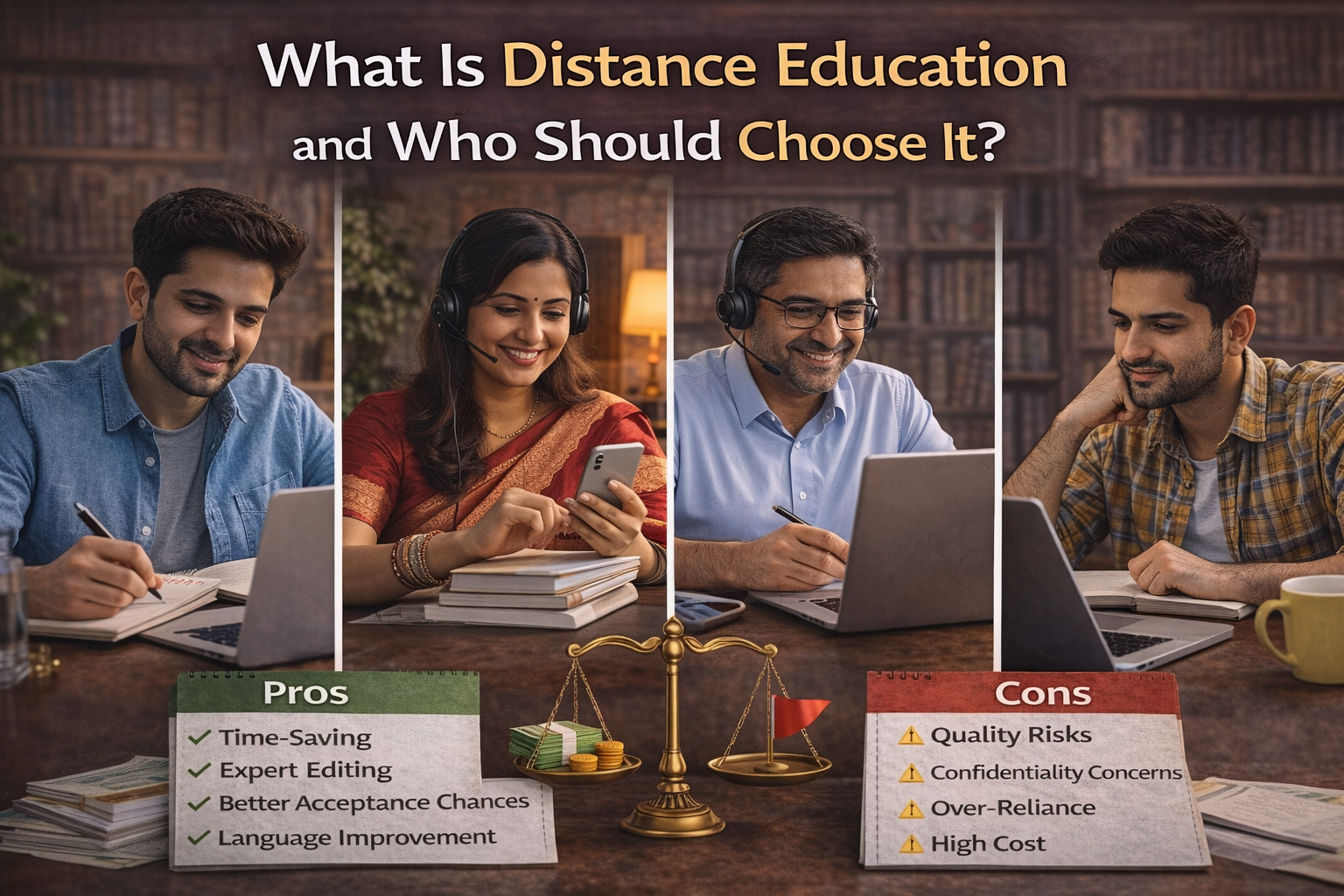
Distance education is best suited for those who require flexibility due to personal or professional circumstances. Working professionals seeking promotions, homemakers looking to resume education, and individuals in rural or semi-urban areas without access to universities all benefit from this mode. It also works for those pursuing additional qualifications alongside regular degrees, such as a second master’s or a diploma in a specialized area. However, students who thrive on direct interaction, campus life, or require laboratory-based study may find traditional education more suitable. The key is to match academic goals, career needs, and personal circumstances before deciding.
The Indian Context and Growing Acceptance
In India, distance education is no longer seen as a compromise but as a parallel system that complements traditional learning. Private universities are increasingly offering blended programs that combine online resources with periodic contact classes. Employers in sectors such as IT, education, and management are more willing to recognize distance degrees, especially when awarded by reputed institutions. The flexibility and reach of this model make it particularly relevant in a country where education is both a personal aspiration and a social expectation. By aligning opportunities with diverse student needs, distance education has become an integral part of India’s higher education framework.
Conclusion
Distance education represents more than a convenient alternative; it is a pathway that makes higher learning accessible to those who might otherwise be left out. For Indian students and professionals navigating family expectations, financial constraints, or workplace demands, it provides a viable route to academic advancement. While challenges exist, choosing a credible institution and maintaining self-discipline can make distance education a powerful tool for career growth and personal fulfillment. Ultimately, it is not about replacing traditional education but expanding the possibilities of who can learn, when, and how, making higher education more inclusive and adaptable to real lives.