
Introduction
For many Indian PhD scholars, especially those studying in private universities, receiving a high similarity score on plagiarism checks can be a major setback. Drafts with excessive similarity percentages can lead to rejection or delay in thesis submission. In such situations, knowing when and how to seek paid support is vital. This blog discusses the right timing and considerations for seeking paid help to improve high-similarity drafts ethically and effectively.
Understanding High Similarity in Plagiarism Reports
High similarity scores indicate that significant portions of your draft match existing sources. This can arise from improper citation, excessive quoting, or lack of original content. However, some similarity is inevitable in research theses, especially in methodology sections or literature reviews.
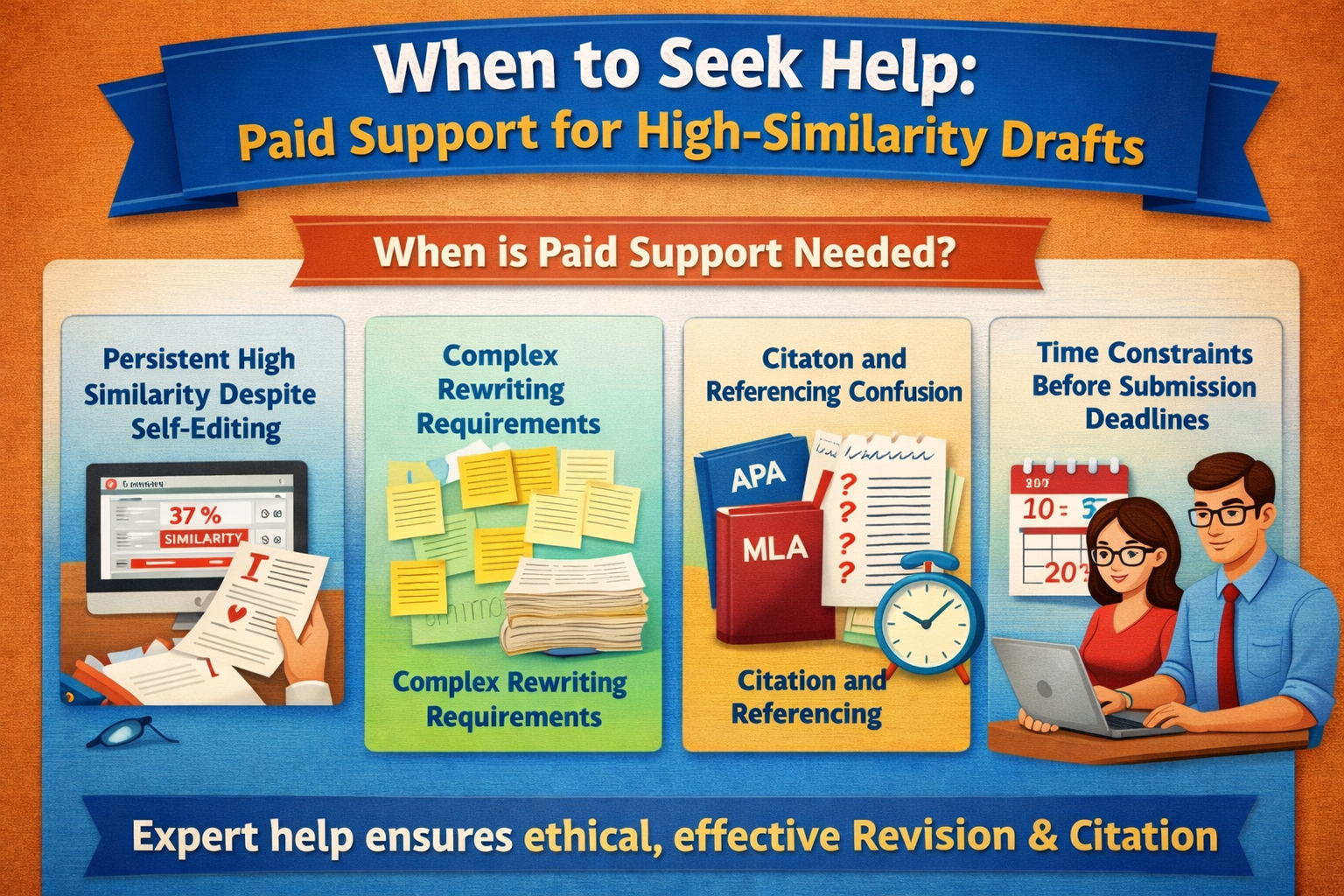
When Is Paid Support Needed?
- Persistent High Similarity Despite Self-Editing
If multiple rounds of self-correction fail to reduce similarity to acceptable university limits (usually below 15-20%), professional help can be beneficial. - Complex Rewriting Requirements
When large sections require paraphrasing without altering meaning, especially technical or dense academic language, expert assistance helps maintain quality. - Citation and Referencing Confusion
Scholars unsure about proper citation formats or how to paraphrase ethically should seek guidance to avoid inadvertent plagiarism. - Time Constraints Before Submission Deadlines
Facing tight deadlines, paid support can speed up the revision process while ensuring compliance with plagiarism policies.
What Paid Support Can Provide
- In-depth Similarity Analysis
Professionals identify exact problem areas and prioritize revisions. - Ethical Paraphrasing and Rewriting
They rephrase content carefully to preserve academic meaning while reducing similarity. - Citation Correction
Ensuring all borrowed material is cited accurately following university guidelines. - Editing and Proofreading
Improving language clarity to complement plagiarism reduction.
When to Avoid Paid Support
- If your draft only shows minor or acceptable similarity levels.
- If you want to bypass your own responsibility for originality.
- If the service offers “quick fixes” or guarantees zero plagiarism unrealistically.
Tips for Choosing Paid Support
- Verify the provider’s academic experience and familiarity with Indian private university standards.
- Check reviews and request samples of similar work.
- Ensure transparency about their methods and revision policies.
- Confirm confidentiality and data security measures.
Conclusion
High similarity drafts can be stressful for Indian PhD scholars, but paid support can be a valuable resource when used responsibly and at the right time. Professional help is most effective when self-efforts have not sufficiently reduced plagiarism, or when complex rewriting and citation challenges arise under tight deadlines. Choosing ethical, experienced providers ensures your thesis meets university standards without compromising your academic integrity. Ultimately, paid support should complement your commitment to producing original, high-quality research.