
Introduction
In India, a growing number of PhD candidates come from families where no one has previously pursued higher education. These first-generation scholars often carry immense pride in their academic journey but also face unique challenges. One such challenge is navigating the complex rules of plagiarism. While plagiarism is a concern for all researchers, first-generation scholars may be more vulnerable due to a lack of early exposure to academic writing norms, citation styles, and research ethics. In a system where plagiarism checks are mandatory for thesis submissions, not having the right guidance can create setbacks that delay or even derail a degree.
Why First-Generation Scholars Are at a Disadvantage
First-generation PhD scholars often enter academia without prior exposure to research-based assignments or structured citation methods during their earlier education. Many come from institutions that prioritised rote learning over research writing. As a result, when they begin working on their thesis in a private university or research centre, they may unknowingly adopt unsafe writing practices. Simple habits, like directly using phrases from source material without proper paraphrasing, can push similarity scores higher than allowed.
Moreover, they might not be aware of plagiarism detection software such as Turnitin, Urkund, or other UGC-approved tools. Without familiarity with these systems, they may not understand how text-matching reports work or how to reduce overlap effectively.
Gaps in Early Academic Training
In most Indian schools and undergraduate courses, there is limited emphasis on academic honesty policies. While some universities have started including research methodology courses, these are often taught in a theoretical way without hands-on exercises. First-generation scholars, therefore, may not know the correct use of in-text citations, quotation marks, or reference styles like APA, MLA, or Chicago. This lack of practical training can lead to accidental plagiarism.
Additionally, they may rely heavily on online resources or previously submitted theses for guidance, which increases the risk of unintentional copying. Without proper paraphrasing skills, they might think changing a few words in a sentence is enough to avoid plagiarism — which is not the case.
Cultural and Language Barriers
Many first-generation researchers come from rural or semi-urban areas where English is not the primary language of instruction. Translating ideas from their mother tongue into academic English can be difficult, and in trying to match formal writing standards, they may unintentionally mimic the structure or phrases of published works. Cultural hesitation to ask for help can also prevent them from seeking plagiarism-related guidance from faculty.
The Role of Private Universities and Research Supervisors
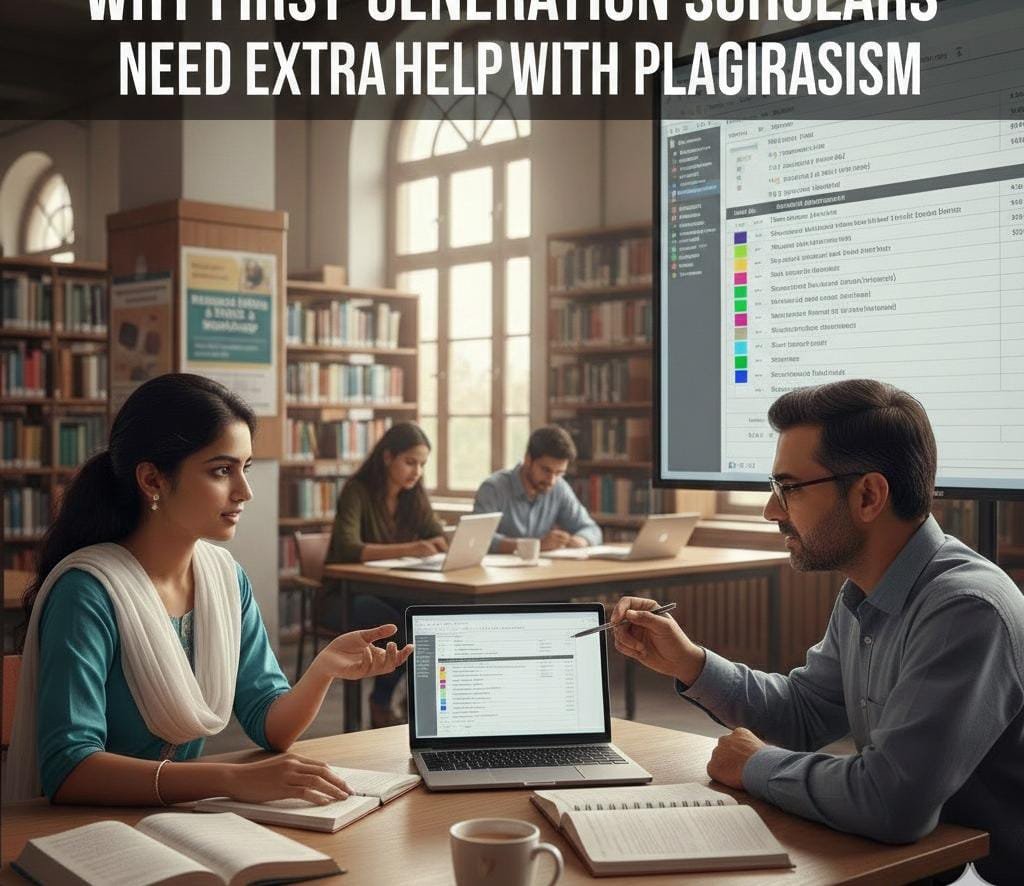
Private universities in India attract many first-generation PhD candidates due to flexible admissions and support systems. However, these institutions need to recognise that plagiarism prevention cannot be a one-time lecture at orientation. Supervisors must actively guide students through the research writing process, demonstrating proper paraphrasing, citation, and referencing techniques with examples.
Workshops and mentorship programmes should be organised early in the research timeline rather than during the pre-submission stage. A proactive approach helps students develop safe writing habits before they produce large sections of their thesis.
Practical Strategies to Support First-Generation Scholars
- Plagiarism Awareness Sessions – Regular, interactive sessions can help students understand the difference between acceptable similarity and unacceptable copying.
- Hands-On Paraphrasing Practice – Real examples from published literature can be used to demonstrate how to rewrite content while retaining meaning.
- Supervisor Feedback Loops – Supervisors should review drafts in stages, providing plagiarism feedback before the final submission.
- Language Support – Offering English language writing assistance can help reduce unintentional text similarity caused by limited vocabulary.
- Access to Plagiarism Tools – Allowing students to check their own work through licensed software can help them learn from reports and make necessary corrections.
Why This Support Benefits Everyone
While these measures specifically target first-generation scholars, they raise the overall quality of research in private universities. Reducing plagiarism risks leads to smoother thesis evaluations, fewer revision cycles, and improved chances of journal acceptance. In the long run, it strengthens the institution’s reputation and creates a supportive academic culture where research integrity is valued.
Conclusion
For first-generation PhD scholars in India, especially those studying in private universities, understanding plagiarism is not just about following rules — it is about protecting their hard-earned academic journey. Their unique challenges make targeted guidance essential. By offering early training, ongoing mentorship, and practical tools, institutions and supervisors can help these scholars submit plagiarism-free theses with confidence. This not only ensures compliance with UGC regulations but also upholds the spirit of original research, giving first-generation academics the fair start they deserve.