
Introduction
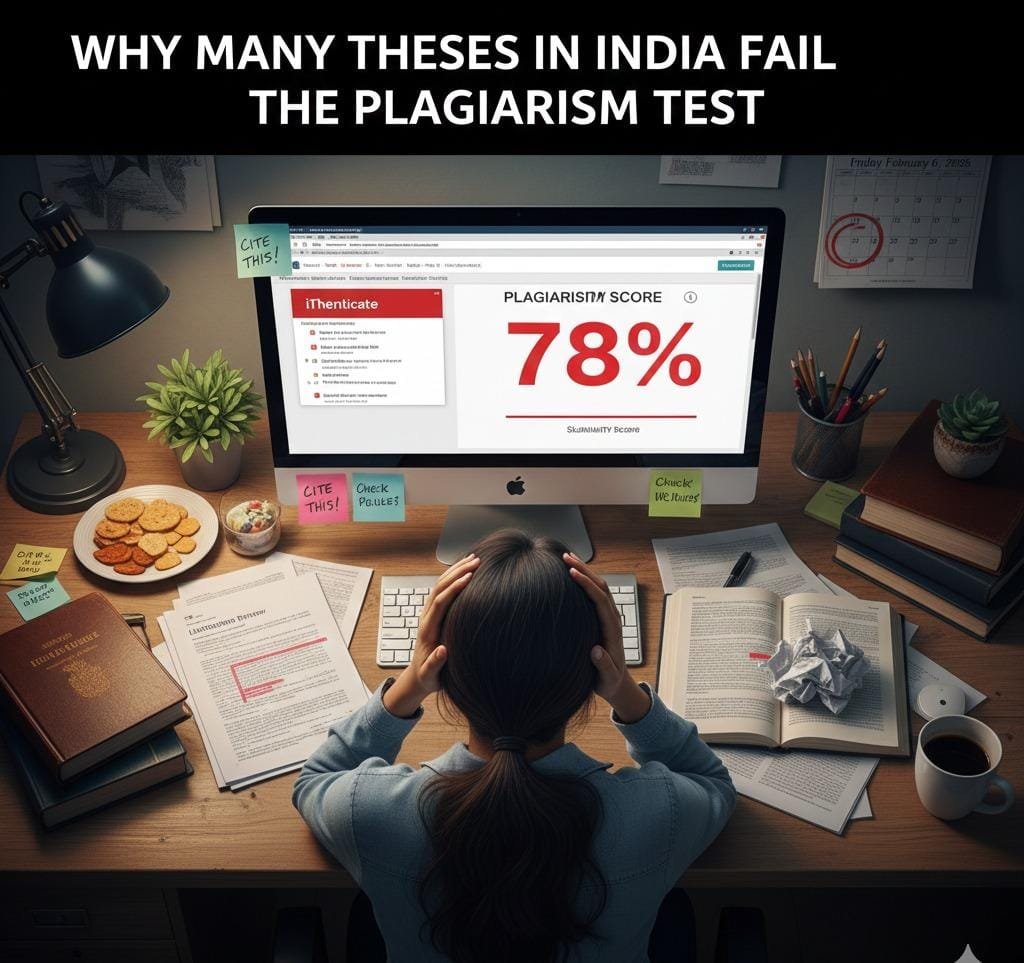
Across India, especially in private universities, a significant number of MPhil and PhD theses fail the plagiarism check during the pre-submission or evaluation stage. This is often a shock to scholars who believe their work is original. While some cases involve deliberate copying, many failures are due to misunderstandings about what counts as plagiarism and how similarity reports work under UGC guidelines. Knowing the common reasons behind these failures can help scholars avoid costly delays, rewrites, and, in some cases, outright rejection.
Lack of Awareness About Plagiarism Rules
Many PhD candidates do not fully understand the UGC’s plagiarism policy. The rules define clear similarity percentage limits for different academic works, and anything above the acceptable threshold can trigger rejection. Scholars who only focus on content quality without checking similarity reports often face problems at the final stage.
Improper or Incomplete Citations
Failing to cite correctly is one of the top reasons for plagiarism detection. Even when the information is paraphrased, missing in-text citations or incomplete references can raise the similarity score. Common mistakes include:
- Forgetting page numbers for direct quotes.
- Mixing different citation styles.
- Not citing secondary sources when ideas are taken indirectly.
Over-Reliance on Paraphrasing Tools
Some scholars use online paraphrasing tools to change wording, believing it will automatically remove plagiarism. In reality, these tools often produce sentences with the same structure and flow, which still get flagged in plagiarism checks.
Copy-Pasting from Literature Reviews
The literature review is where plagiarism rates often spike. Scholars sometimes copy long passages from previous theses, research articles, or online summaries, thinking it will save time. Even if sources are cited, excessive direct text can push similarity beyond allowed limits.
Self-Plagiarism from Published Work
Many scholars publish research papers during their PhD. Later, they reuse parts of these papers in the thesis without proper attribution, assuming they have the right to do so. However, UGC guidelines consider this self-plagiarism unless it is clearly cited and referenced.
Not Running a Pre-Submission Plagiarism Check
Some students wait for the official university check instead of running their own. This means they have no opportunity to fix flagged sections in advance. In private universities, where timelines are often strict, this can lead to rushed and ineffective corrections.
Conclusion
Failing the plagiarism test is rarely about lack of hard work; it is often about lack of awareness and preparation. By understanding UGC’s rules, citing properly, avoiding over-dependence on paraphrasing tools, and running checks before submission, scholars can reduce the risk of rejection. For PhD candidates in private universities, these practices are essential not only for passing the plagiarism test but also for maintaining the integrity and originality of their academic contribution.